When I was younger, I had an early introduction to the internet thanks to AOL. I found out I could use Netscape instead of AOL Desktop to get on the real internet instead of the KOL (Kids AOL) portal. Netscape didn’t stick around much longer after that, so I ended up using Firefox as my main browser and have been since. That said, I have experimented with many many browsers in my life, ranging from Opera and Maxthon to Zen and Floorp. Most recently, I’ve started trying out Vivaldi and aside from a few issues, I feel right at home.
I tried Vivaldi…
…and I instantly recalled what using Netscape was like. Having my browser, email, and RSS all in one app felt like home, and having a new tab page with whatever widgets and shortcuts I wanted hearkened back to iGoogle – may it rest in peace. For the first time in years, the browser wasn’t trying to get out of my way and hide. My browser was very much up in front, ready to do whatever task I asked of it, and gave me the tools I needed to get it done.
…but then I ran into some issues. Occasionally, advertisements started appearing on pages where they should have been blocked. Assuming this was a bug in Vivaldi’s native ad blocker, I reviewed the settings and found that some Vivaldi sponsors were exempted from this ad blocker a-la-AdBlock Plus, but with a single click I was able to turn this off. Even after this setting change, however, I found that ads were still appearing on pages. I elected to forego Vivaldi’s ad blocker and use uBlock Origin Lite. Yet, even with uBlock Origin Lite, ads were appearing on pages. What gives??
I read into this more and found that this had a lot to do with the deprecation of Chromium’s Manifest V2. Manifest V2, in laymans terms, is the interface which developers use to write extensions – such as ad blockers – for Chromium based browsers which includes Vivaldi. Recently, Google made changes to the Chromium project to sunset Manifest V2 in favor of Manifest V3, which effectively neutered an ad blocker’s ability to block content as they always have. Presented as a security improvement, it was accepted into the Chromium project and the changes have been trickling down to Chromium’s children.
…So why not try SeaMonkey?
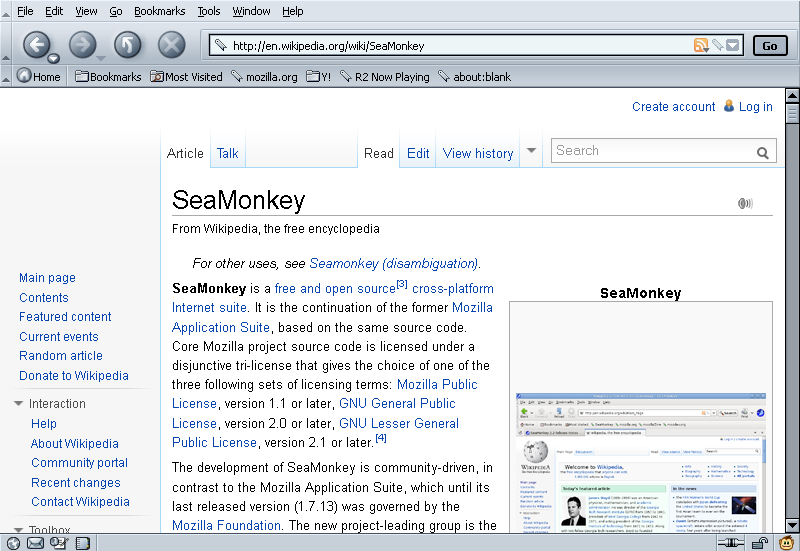
Frustrated by this, I installed SeaMonkey, which is a continuation of the Mozilla Suite, itself a continuation of Netscape. SeaMonkey shares a significant amount of code with Firefox, which theoretically should mean it works with sites designed for Firefox. In practice, this is not true at all. SeaMonkey’s rendering code seems to be lagging far behind Firefox, likely due to the ever-growing architectural differences between the two projects. To add to this, uBlock Origin doesn’t even support SeaMonkey anymore due to Firefox’s migration to using WebExtensions rather than the old school format of extensions that Firefox used to use, so I was stuck with an old version of uBlock Origin that didn’t quite work as expected either.
Which lead me to an idea – what if Netscape were to make a comeback?
While SeaMonkey is technically Netscape’s closest living relative, the idea I have is rather different. Vivaldi elected to take Chromium as a base and bolt on their own browser UX on top of it. The entire UI is custom, which is a standout feature compared to other Chromium-based browsers which are functionally Chrome with a few fancy buttons added. What if we did the same to Firefox? Firefox’s UI is highly customizable, and the base software is well established and plenty of forks exist. Browsers such as Floorp and Zen make heavy changes to the Firefox UX while remaining compatible with Firefox’s extension and theme library. What if a project were to modify Firefox with its own UI which supported features like a custom new tab page, widgets, RSS, web panels, mail, and calendar? These would functionally be add-ons to Firefox integrated into the browser with a custom UX making them feel right at home, similar to my impression of how Vivaldi does it. I really like this idea!
Why bring back a dead brand?
Netscape is very much dead. It existed in a much simpler time on the internet, back when standards were being forged and the Internet was a much smaller place. Netscape may initially seem like a silly choice for such a project.
The reason I believe Netscape is a perfect brand for this project is because of what Netscape used to be. It existed in a time before AI, before the Internet was seemingly consolidated into a handful of mega-platforms, and when the browser was a more integral tool in your computer’s software library. To many, Netscape represents the old Internet. A browser which you can customize, from a time when using your computer was easier. When it was quicker to get things done on your computer. When you could customize your browser as desired.
Netscape could be that browser again.
Envision this: A Firefox-based web browser which has customizability extended beyond Firefox’s customization. A browser with an integrated email client, akin to having Thunderbird bolted right in. A calendar client can notify you of when your tasks are being done. You have news coming via RSS? It’s built right into its own inbox. Have many email or calendar accounts? That’s no problem, you can tie them right into your browser without needing to have a tab open for each one. Working offline? That’s fine – it supports that too. Want to use an AI tool? There are plenty of Firefox extensions available.
This would take a much different approach from SeaMonkey. Rather than infinitely trying to maintain an infinitely diverging codebase, why not build atop a modern, secure, and updated platform? Firefox would serve as the engine to drive this, and Netscape is a brand that people might recognize and understand what the goal is.
The browser that gets it done.
If someone were to make this happen, I would be very happy.












Leave a Reply