• Sailors

    Alone
    Gliding through the open skies
    Humming to our lullabies
    From when we were young

    A dream
    Of knowing who we’re meant to be
    Thoughts cascading so endlessly
    Destiny unknown

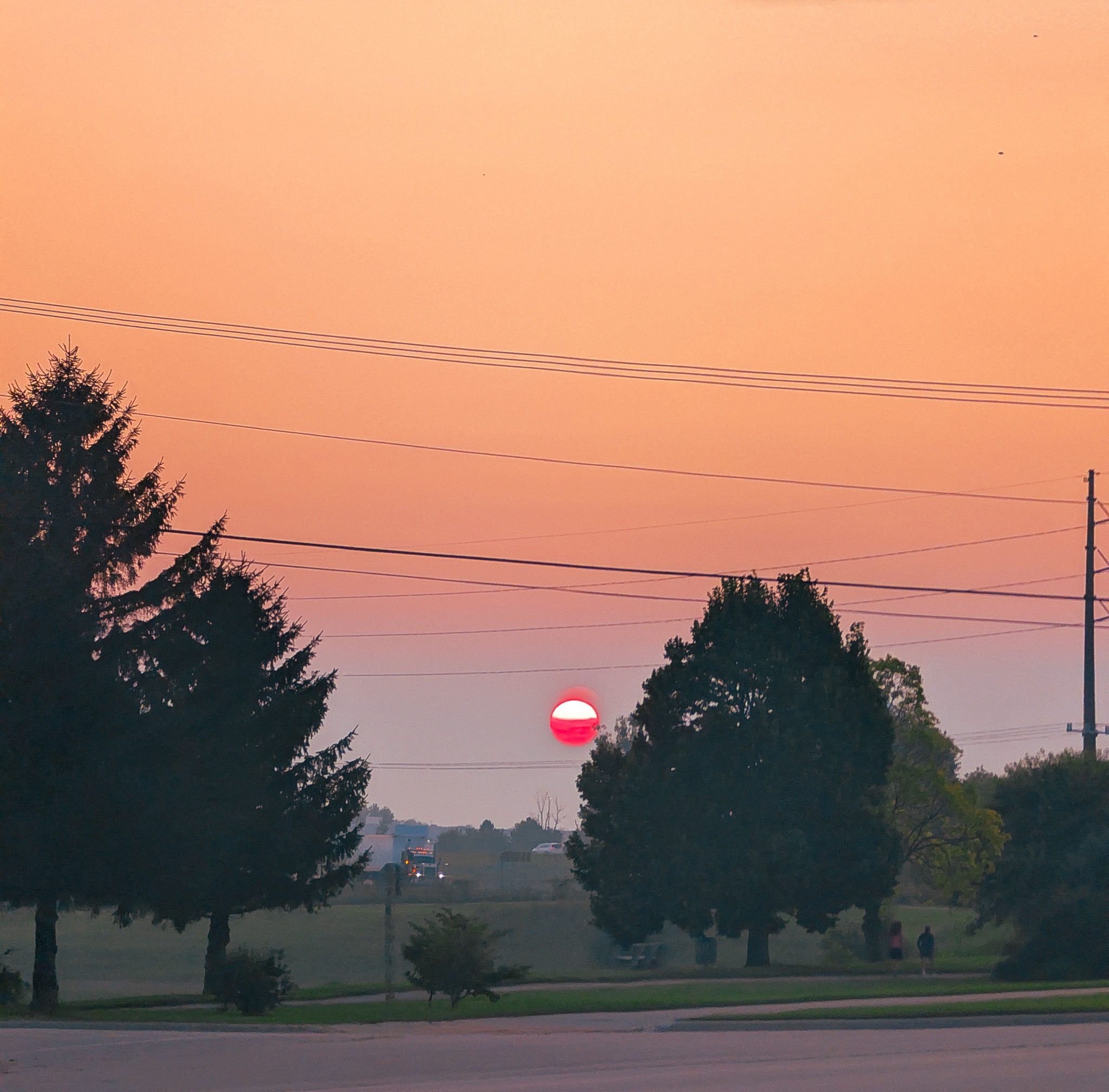
    A dot
    A speck of insignificance
    Shining in its brilliance
    Mother of the human soul

    A vessel of ten billion wishes
    Unaware of her vital mission
    To kindle the spark of the unknown

    A vessel of ten billion sailors
    Cast out into a sea of danger
    Guiding us to our destiny
    She shows us who we’re meant to be

  • Saving Lives during Climate Crises

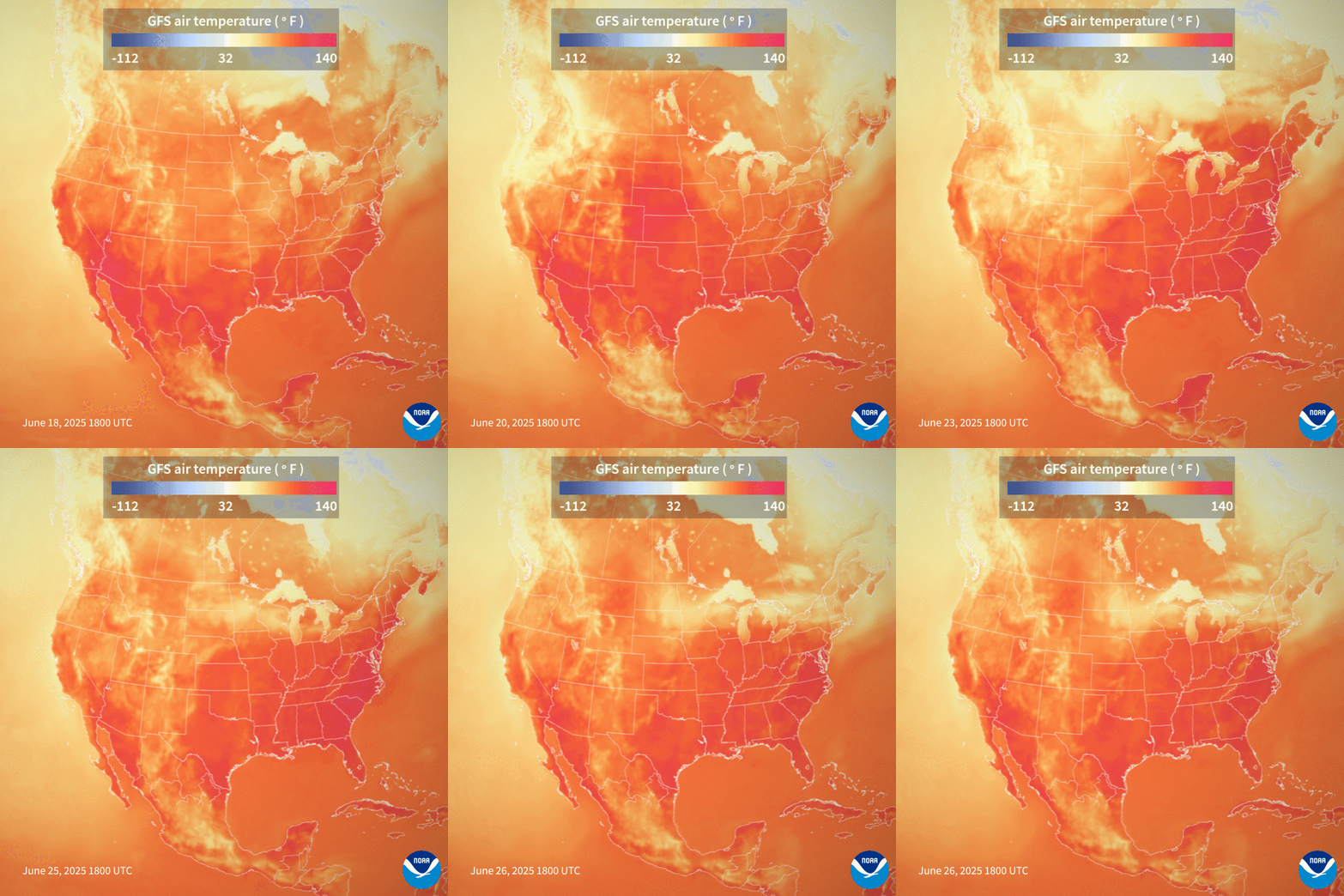
    There is a heat wave affecting much of the United States and Europe. During heat waves, it is often too hot and humid for the body to effectively cool itself, increasing the risk of heat stroke or even death.

    As climate change causes these crises to become more intense and frequent, it’s very important to keep yourself and others safe – especially those who may not have freedom to limit their exposure to these unsafe conditions. Grocery store employees, mail couriers, food and parcel delivery drivers, and many other individuals are often forced to work during these times with little to no accommodation.

    Having previously worked at Walmart in my late teens, I have personally experienced a heat wave and know what it’s like to be out in the hot sun all day without any formal accommodations from my employer. I was punished for taking too many breaks to get water at the water fountain, being told I should have brought my own water. An empathetic manager provided sugary drinks to help keep us hydrated and energized, but was also punished for taking product from shelves for this purpose.

    As the legal standards protecting individuals from extreme weather are often lacking as I experienced, I believe it is important to take personal action to keep these people safe. There are ways that individuals can reduce the weather expsoure for these workers.

    I would like to go over a few areas that we can directly address these concerns, then go over the societal changes that should be in place to protect these individuals.

    Saving it for later

    Whether it’s online shopping, getting groceries, or having contractors fix something on your home, deferring the need for these tasks to when the weather improves could save lives or simply help someone’s day be better. Extreme weather puts strain on the systems that keep society afloat, and reducing the load on these systems could make a significant difference for someone.

    Groceries

    stacked shopping carts
    Photo by Eduardo Soares on Pexels.com

    If you are able, consider picking up your groceries in-store, or schedule grocery pickup for times of the day that have cooler temperatures. The interior of these buildings are cooled with massive air conditioning units, but the outside of these buildings are surrounded by parking lots with extremely hot asphalt which makes the air around the building significantly hotter than the ambient temperature – with some studies showing the air is at least 35 degrees (fahrenheit) hotter than the air would have been1 otherwise. This puts grocery store employees at high risk of heat stroke, as they constantly cycle from the store to cars where they are loading groceries into.

    Packages

    postal service van parked on a street sidewalk
    Photo by Ekaterina Belinskaya on Pexels.com

    Additionally, during times of extreme weather, consider choosing a slower delivery option or make your purchase when the weather is more mild. USPS workers often drive the Grumman LLV, a vehicle not equipped with air conditioning. While the USPS is replacing these vehicles with the Oshkosh NGDV, most USPS employees do not yet have the new vehicles. Additionally, many delivery drivers need to walk long distances for some residents to deliver packages or mail.

    You may consider having your packages delivered to a common package pickup facility, where the package can be held for you until you are able to pick it up. These facilities are bulk-pickup locations where many packages can be delivered at once by the driver, reducing the amount of walking and vehicle stops needed.

    Food Delivery

    a person in green jacket holding a box
    Photo by ROMAN ODINTSOV on Pexels.com

    Avoid having food delivered to your home during hours of peak heat. Food delivery drivers may not always have working air conditioning, and the heat is stressful on aging or poorly maintained vehicles, which could cause a breakdown. I have a dark-colored project vehicle which does not have air conditioning, and on hot days it is not drivable because of how hot the interior gets with the engine heat combined with ambient heat.

    Contractors

    new construction in elk grove california
    Photo by D Goug on Pexels.com

    If you are having service done on your home or property, consider contacting your contractor to ask if they would prefer another day where the weather is cooler. It is incredibly dangerous for contractors to be working outside in this weather. Becoming dizzy due to dehydration on a ladder could be fatal for them. If this work is essential, offer your contractor frequent breaks, hydration, and opportunity to cool off in your home.

    On The Road

    aerial view of cars in the parking lots
    Photo by Viktoria B. on Pexels.com

    Always check your back seat. Cars get very hot, and an average of thirty-seven children die2 each year due to being left in a hot car. In 2024, at least 111 dogs died after being left in hot cars3. Even if your car has air conditioning, that does not mean it is a safe place to leave a living creature. Air conditioning can fail, batteries die, engines stall, and a car can easily become an oven for anything left inside.

    Generally, during extreme weather, it is best to stay home if you can. The least you can expose yourself, your family, and your pets to extreme weather, the better.

    The bigger picture

    These issues do not exist in a vacuum. I should not have been treated how I was when I worked at Walmart. There should be better protections for workers limiting their exposure to dangerous conditions. A majority of people would agree that the USPS provides a critical role, but not every package or letter they deliver is urgent or is needed in the middle of a heat wave, blizzard, or extreme cold.

    Workers deserve to be safe at their workplace. The Occupational Safety and Health Administration – OSHA – would do well to enforce stricter limits on what is allowable during extreme weather, even for critical roles which must continue to operate regardless of the weather.

    During the COVID-19 pandemic, we saw quite a bit of change. Many businesses found different ways to operate. Remote work became a lot more common. We learned what parts of society were essential to keep it moving. I believe the climate crisis should be treated similarly. As time goes on, extreme weather will continue to get worse. It is real – the winters I remember as a child are largely gone and summers continue to get hotter. We need to accept that the reality we live in is one where our climate will become more hostile, and we as a society need to be ready for this challenge.

    During the 1980s, it was discovered that chlorofluorocarbons (CFCs) were causing damage to the Earth’s ozone layer, increasing the risk of skin cancers worldwide. In response, the United Nations enacted the Montreal Protocol to permanently alter how these chemicals would be used, often removing them from commercial goods entirely. This was a worldwide crisis where swift action was taken to address a world-wide climate emergency and it worked. We are in a time where this type of action is needed. We must take a multifaceted approach to climate change. Every angle must be approached, because climate change affects every aspect of our lives worldwide.

    Humanity has the capacity to make great change, great improvement, and make the lives of everyone better. We can save millions of lives and improve the quality of life for billions to come.

    So when can we get started?

    Related Articles
    Fediverse Reactions
  • Delegating Humanity – Discussing AI’s impact on society

    Artificial intelligence – more specifically Generative AI – has arrived and is now found across many different classes of electronics. Whether it’s Microsoft Copilot inserted into every application on your PC, Google Photos offering to enhance your family photos with AI, or Siri deflecting to ChatGPT to answer a simple question, AI seems to be here to stay.

    Yet, I have seen a concerning lack of discussion about what AI should be used for. While AI is not inherently bad, the general target of current AI systems seems to be replacing tasks that humans do for fun. Artificial intelligence is suddenly being used to replace our creative outlets. Photo editing, music creation, graphic design, poetry, and even writing of essays are being supplemented or replaced entirely with AI. With time, it grows more difficult to discern what is AI-generated, AI-enhanced, or created with genuine human expression.

    Artificial intelligence did not appear overnight. It has been a hypothetical goal of computing to one day achieve. The hopeful believed that having computers spend time thinking for us would free up our time to spend more time with family, friends, and on the hobbies we love. The reality of the situation is far from this idealized fantasy. Artificial intelligence is instead being used to take shortcuts.

    Go faster. Produce more. Get it done with AI. Do it all with AI.

    If this sounds familiar, that’s because we as a society have been down this road a number of times. When the automobile arrived, horses found themselves without a job. When the assembly line became automated, many factory workers found themselves unemployed. When the internet made online shopping easier than shopping in-person, suddenly centuries-old stores found themselves unable to compete.

    The distinction I wish to draw is that AI is being used to replace the human experience rather than improve it.

    Thinking Machines

    Early on, the first modern computers were used to crack the Axis powers’ message encryption used during World War II. These computers were crucial in helping the Allied powers win the war. The technology used in the war effort would later go on to drive the computing boom. With computers becoming mainstream, the technology would go on to make its way into the homes of everyone, and eventually in our pockets and on our wrists.

    As technology continued speeding up exponentially while also growing smaller, generative artificial intelligence became accessible across many of our devices. With the technological progression, it became incredibly difficult to distinguish what was crafted with human hands and what was spawned in a data center.

    Artificial intelligence has been the subject of many science fiction and horror stories for many decades now. As with any technology that is introduced, skeptics and luddites alike often had fear of computers one day taking over humanity or being used to surveil and control the general population. This fear inspired stories such as George Orwell’s 1984 and James Cameron’s The Terminator. While technology has generally made life easier and more comfortable, many were skeptical about the future of technology and the impact it would have on society.

    A Bad DeepDream

    With generative artificial intelligence becoming available to the masses, many of the science fiction horror stories began to sound more plausible. In the late 2010s, the technology was initially used to generate rather unreal or absurd images that were plainly AI. Researchers at Google found that if the neural network used for face recognition was run in reverse and parameters were adjusted, the software could hallucinate faces into images, generating rather psychedelic imagery.

    Generative AI would quickly reach a turning point where it became convincing enough to fool many people. By the mid-2020s, AI had transitioned from an experimental toy to a quick, easy way to generate any image or video that you want to exist. Communities appeared on various social networks where individuals would share the prompt they provided to a model and the output they received from it. One such example went viral in 2023, when Reddit user chaindrop posted an absurd video of Will Smith eating spaghetti.

    Though rudimentary, it shows significant technical progress over the previous Mona Lisa example using earlier AI technology. This progress would continue rapidly, with billions being invested in the future of the technology. Many realized that AI would have the capacity to impersonate people as it progressed. By 2026, this concern is now a reality. AI models are now capable of creating hyper-realistic images, videos, audio, and text that has human tone and cadence.

    In this promotional video released by Google for their Veo 3 product, every single sequence is AI-generated, including the sounds.

    The Forbidden Fruit

    Many technology companies have gone all-in on marketing their AI-powered products. Microsoft began incorporating their Copilot product into the Windows operating system and their cloud services. Google replaced Assistant with Gemini, now beginning to design their platforms around it. Anthropic Claude gained popularity within the tech sector for its technical prowess. Within everyone’s pockets and homes, AI has arrived whether or not it was wanted.

    And society has taken a bite of the forbidden fruit.

    Whether in online groups or at local craft fairs, AI is ever-present like a persistent fly that you can’t quite shoo away. It has been incorporated into workflows at many – if not most – workplaces, with spaces such as marketing, programming, cybersecurity, and art being outsourced to the digital brains residing in data centers. Tasks traditionally requiring a creative spark and authenticity are often being aided or replaced by computer-generated products lacking human touch. On social media, flyers for local events, weddings, funerals, and cook-offs are being generated with AI. Some of the most intimate moments of human life are being delegated to a computer.

    The United States of America turns 250 this year. In celebration, local artists are largely being ignored in favor of AI-generated images which are being placed on merchandise and sold both online and in stores. Is it okay to be celebrating our semiquincentennial with computer-generated art and not celebrating by supporting local artists and businesses? It feels incredibly wrong to me.

    To demonstrate my point, I generated the entire image above using ChatGPT. Nullville, WI doesn’t exist. The shirt doesn’t exist. You can’t buy it anywhere. Yet I can assure you that on your local Facebook groups, this type of image would feel right at home.

    No artists were involved in making this image. Nobody gets credit. No artistic process was involved. A simple prompt – “Generate a commemorative image for america’s 250th anniversary in Nullville, WI” created that poster. It was incredibly easy, but there was no challenge in doing this.

    Nobody is rewarded for their work. Nobody worked for it.

    I am rather vocal about my concerns with local businesses and organizations using AI, as I personally feel it is disingenuous especially when generating imagery of food or a product for sale. A common argument I have received in reply is that businesses do not have the time or financial resources to hire an artist to create their menus, logos, or advertisements. I’d like to offer counterpoints based on personal experience.

    In 2011, I tried learning how to create digital art. I was taking classes in high school for Photoshop, but didn’t want to pay for it at home, so I tried applying my skills in the GNU Image Manipulation Program (GIMP). Awkward acronym aside, this program offers much of what Photoshop can do at no cost. It is developed by the open-source community entirely for free. There is no subscription or purchase required for this software, and it runs on just about any computer whether it runs Windows, macOS, or Linux.

    I created this article’s featured image entirely using GIMP and free software to generate the QR code. It took me about 15 minutes and cost me nothing.

    To make a menu like this using LibreOffice Draw, it takes minimal effort and is very approachable if you already know how to use a word processor. I spent five minutes making this as a demonstration. If you learn the skill, you can save time and money.

    If you never try, you will never learn the skill. You will be stuck delegating your tasks to AI, and you will never develop your own unique style or ability.
    Is AI the right tool?

    Artificial intelligence is incredible; humanity even more so. We (generally) have two hands, two feet, and an incredible computer called a brain. But humans are fragile. We have thin skin. We stand upright and by some miracle only fall down sometimes. We break bones, sprain ankles, and get sick.

    Yet even if you are bedridden, disabled, or sick, you can think. You can dream. When you sleep, you can be taken to wherever your mind invents that night. You can revisit old friends, address fears, and wake up to repeat the whole thing again tomorrow. A blind person can still draw. A deaf person can still sing. Beethoven himself was deaf and is one of the most famous composers to have lived. We are adaptable creatures who approach every challenge with gusto and make the best of what we are capable of.

    An image showing the steps of drawing an owl, with the first step being "Draw some circles" and the second being "Draw the rest of the fucking owl".

    Not everybody will be the next Picasso, Mozart, or Steve Jobs. Yet, we try anyway, and in the process we become whomever we were meant to be. By outsourcing our human creativity to a computer, we are giving up this process. We aren’t fostering our artists anymore. We aren’t relying on an expert who can figure it out. There is an immense human loss when we delegate our humanity to machines.

    Our creativity as a species is what has birthed numerous tools. Humans have used tools to make new ones, with each invention depending on the previous ones. To make fire, you need wood. To make metal, you need fire. To make computers, you need to trick the rocks into thinking using science involving millenia of human progress.

    You can use a sock to wash your dishes, and you can use a rock as a hammer. Yet, if you were to survey most people, I doubt you would get many people saying their favorite sponge is a sock, and their favorite hammer is a rock. Any tradesman would tell you that the right tool for the right job is worth its weight in gold.

    Artificial intelligence is but one tool that has been added to humanity’s arsenal. AI will solve problems for us. AI will save lives. Like all things in life though, there is nuance. Why should AI be used to generate art when art is the passion of millions of people? Why use AI to write an email when it is such a critical skill to develop? Why use AI to generate song when there is no human connection within?
    Art is part of the core human experience. Art is in everything we as humans do. From programming to welding, the core of our skillset is art. If practice makes perfect, how can we ever get there if we don’t give ourselves the chance?

    You can never be an artist if you don’t try.

    In Conclusion

    ancient lascaux cave paintings of horses
    Photo by Reinhard Bruckner on Pexels.com

    I am against AI being shoehorned into every single tech product. Despite being incredibly adept for some purposes, it should only be used as but one tool in humanity’s toolbelt.

    Artificial intelligence should not replace the very skills that make us human. Whether it is singing, painting, programming, or any other of our muses, these are skills that should be left to us. Throughout history, even before written language was invented, humans were painting pictures. We told stories of the stars, sang songs of our ancestors, and expressed ourselves in our creations.

    This is a tradition that is sacred to humanity. Art is core to humanity itself. Our work is our art – two programmers trying to solve the same task will have very different code. Two artists asked to draw a picture of someone’s cat will produce very different results. Countless songs about the same stories retold in so many ways.

    AI should be used to free people’s time, improve our health, and improve our safety. AI has the potential to give people free time to pursue their interests. People should have more time to spend time with friends and family, write poetry, sing, dance, and enjoy life. Giving up this spark that makes us human will cost us more than can be expressed with dollars and cents. The very essence of what makes us human – our soul – is at risk.

    Do not delegate your humanity.

    More Info
    Fediverse Reactions
  • Bring Back Netscape

    When I was younger, I had an early introduction to the internet thanks to AOL. I found out I could use Netscape instead of AOL Desktop to get on the real internet instead of the KOL (Kids AOL) portal. Netscape didn’t stick around much longer after that, so I ended up using Firefox as my main browser and have been since. That said, I have experimented with many many browsers in my life, ranging from Opera and Maxthon to Zen and Floorp. Most recently, I’ve started trying out Vivaldi and aside from a few issues, I feel right at home.

    I tried Vivaldi…

    …and I instantly recalled what using Netscape was like. Having my browser, email, and RSS all in one app felt like home, and having a new tab page with whatever widgets and shortcuts I wanted hearkened back to iGoogle – may it rest in peace. For the first time in years, the browser wasn’t trying to get out of my way and hide. My browser was very much up in front, ready to do whatever task I asked of it, and gave me the tools I needed to get it done.

    …but then I ran into some issues. Occasionally, advertisements started appearing on pages where they should have been blocked. Assuming this was a bug in Vivaldi’s native ad blocker, I reviewed the settings and found that some Vivaldi sponsors were exempted from this ad blocker a-la-AdBlock Plus, but with a single click I was able to turn this off. Even after this setting change, however, I found that ads were still appearing on pages. I elected to forego Vivaldi’s ad blocker and use uBlock Origin Lite. Yet, even with uBlock Origin Lite, ads were appearing on pages. What gives??

    I read into this more and found that this had a lot to do with the deprecation of Chromium’s Manifest V2. Manifest V2, in laymans terms, is the interface which developers use to write extensions – such as ad blockers – for Chromium based browsers which includes Vivaldi. Recently, Google made changes to the Chromium project to sunset Manifest V2 in favor of Manifest V3, which effectively neutered an ad blocker’s ability to block content as they always have. Presented as a security improvement, it was accepted into the Chromium project and the changes have been trickling down to Chromium’s children.

    …So why not try SeaMonkey?

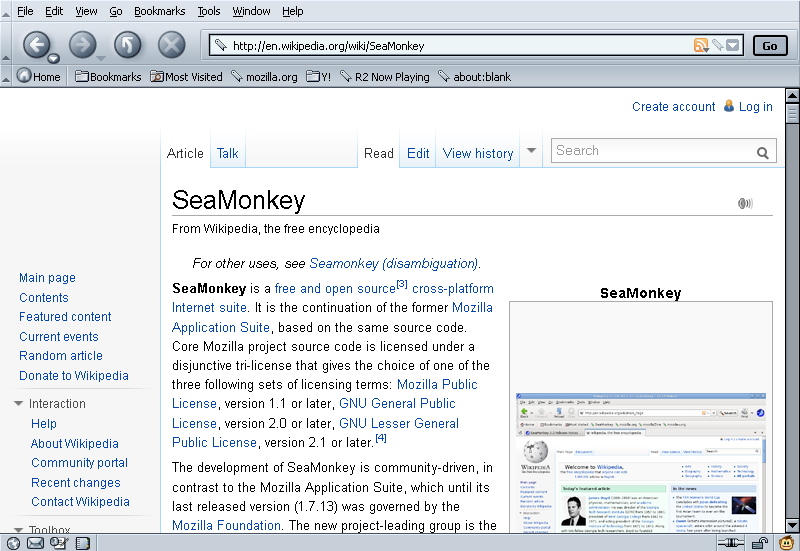
    Frustrated by this, I installed SeaMonkey, which is a continuation of the Mozilla Suite, itself a continuation of Netscape. SeaMonkey shares a significant amount of code with Firefox, which theoretically should mean it works with sites designed for Firefox. In practice, this is not true at all. SeaMonkey’s rendering code seems to be lagging far behind Firefox, likely due to the ever-growing architectural differences between the two projects. To add to this, uBlock Origin doesn’t even support SeaMonkey anymore due to Firefox’s migration to using WebExtensions rather than the old school format of extensions that Firefox used to use, so I was stuck with an old version of uBlock Origin that didn’t quite work as expected either.

    Which lead me to an idea – what if Netscape were to make a comeback?

    While SeaMonkey is technically Netscape’s closest living relative, the idea I have is rather different. Vivaldi elected to take Chromium as a base and bolt on their own browser UX on top of it. The entire UI is custom, which is a standout feature compared to other Chromium-based browsers which are functionally Chrome with a few fancy buttons added. What if we did the same to Firefox? Firefox’s UI is highly customizable, and the base software is well established and plenty of forks exist. Browsers such as Floorp and Zen make heavy changes to the Firefox UX while remaining compatible with Firefox’s extension and theme library. What if a project were to modify Firefox with its own UI which supported features like a custom new tab page, widgets, RSS, web panels, mail, and calendar? These would functionally be add-ons to Firefox integrated into the browser with a custom UX making them feel right at home, similar to my impression of how Vivaldi does it. I really like this idea!

    Why bring back a dead brand?

    Netscape is very much dead. It existed in a much simpler time on the internet, back when standards were being forged and the Internet was a much smaller place. Netscape may initially seem like a silly choice for such a project.

    The reason I believe Netscape is a perfect brand for this project is because of what Netscape used to be. It existed in a time before AI, before the Internet was seemingly consolidated into a handful of mega-platforms, and when the browser was a more integral tool in your computer’s software library. To many, Netscape represents the old Internet. A browser which you can customize, from a time when using your computer was easier. When it was quicker to get things done on your computer. When you could customize your browser as desired.

    Netscape could be that browser again.

    Envision this: A Firefox-based web browser which has customizability extended beyond Firefox’s customization. A browser with an integrated email client, akin to having Thunderbird bolted right in. A calendar client can notify you of when your tasks are being done. You have news coming via RSS? It’s built right into its own inbox. Have many email or calendar accounts? That’s no problem, you can tie them right into your browser without needing to have a tab open for each one. Working offline? That’s fine – it supports that too. Want to use an AI tool? There are plenty of Firefox extensions available.

    This would take a much different approach from SeaMonkey. Rather than infinitely trying to maintain an infinitely diverging codebase, why not build atop a modern, secure, and updated platform? Firefox would serve as the engine to drive this, and Netscape is a brand that people might recognize and understand what the goal is.

    The browser that gets it done.

    If someone were to make this happen, I would be very happy.

    Fediverse Reactions
  • A Really Powerful Deathtrap: An Outer Wilds Rant

    Outer Wilds by Mobius Digital is one of the most touching stories I have had the pleasure of experiencing.

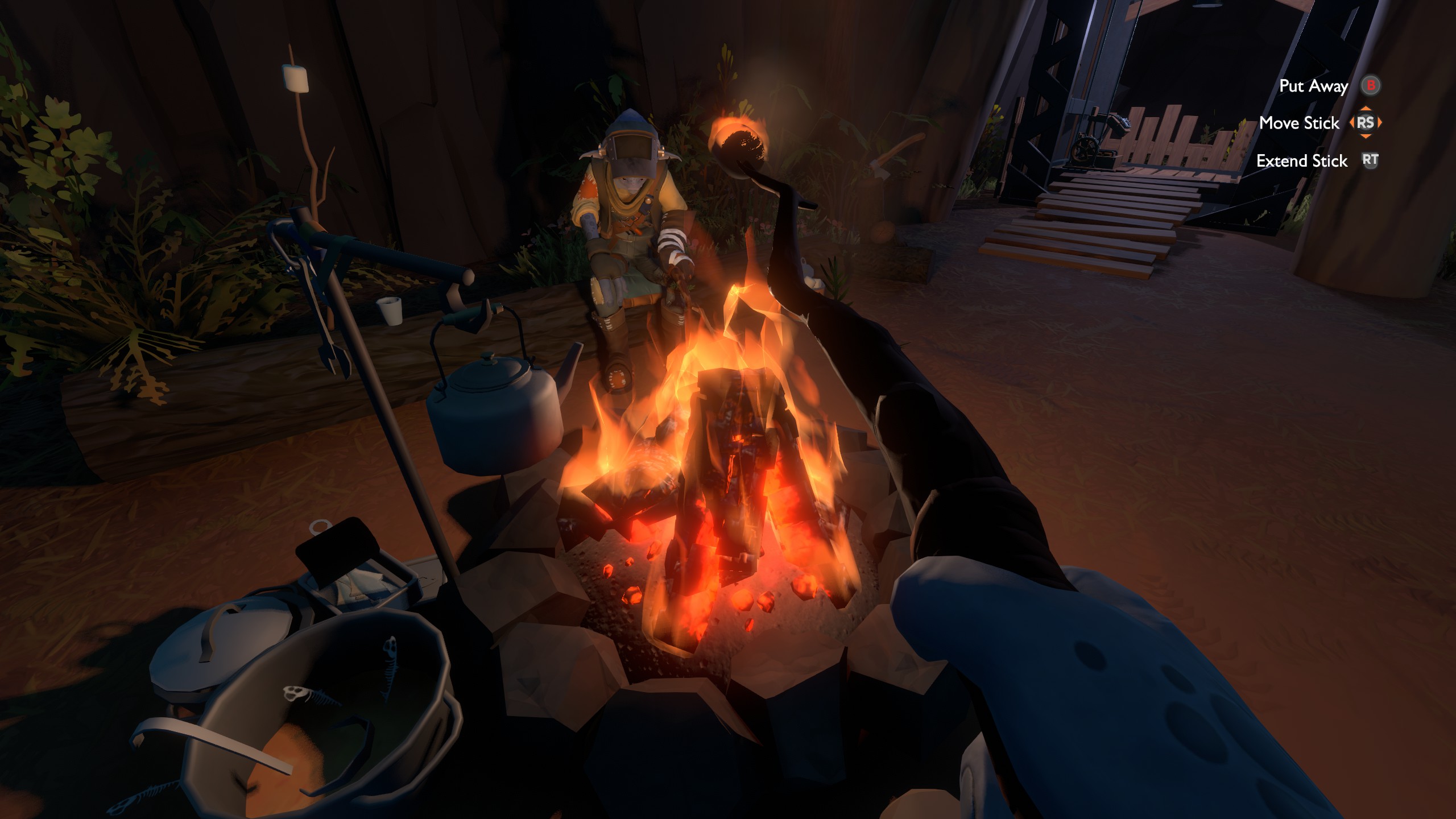
    You wake up next to a campfire, greeted by fellow Hearthian Slate and a tin of marshmallows. After burning your marshmallows and obtaining the launch codes, it is your turn to continue the tradition of Hearthian space exploration. Luckily for you, you have the Nomai translation tool! After successfully launching your Really Powerful Death Trap, you become the first Hearthian to translate the texts within the Nomai ruins and uncover the secrets of the universe along the way.

    But this universe, like ours, has unexpected secrets if you look a bit closer.

    My first playthrough took dozens of hours, many 22-minute lives, several ship explosions, far too many crashes into the sun, and plenty of confusion. But once the pieces of the puzzle started to connect, I realized just how significant the story was, and how insignificant I was.

    I won’t discuss story specifics; it is critical that anyone who plays this masterpiece goes in blind. Outer Wilds is very much a game that you play once, cry once, and remember forever.


    When I was a child, I really enjoyed watching the History Channel, Discovery Channel, Animal Planet, etc. I have always loved to learn about the world around me and beyond. I struggled to understand the concept of time, often consumed by thoughts like “The sun is going to blow up! The Earth will die! What do we do??“. While it feels like some children are able to grapple with these thoughts, put them in their pocket, and forget them there, I was unable to escape them. They have haunted me since childhood, thoughts of mortality, time, and some sort of twisted beauty in it.

    Why am I here? Why are we here?

    I have never found an answer. Religion, science, and meditation all seemed to offer explanations, but none reached the part of me that was asking.

    In 2023, I played Outer Wilds for the first time.

    Outer Wilds is a story about love, death, and the significance of being insignificant. You are a Hearthian setting out into a small, strange solar system, uncovering secrets that existed long before you arrived. You learn about those who came before you, what their fate was, and what your fate was, is, and will be. The story I experienced did not stop at my screen. The Hearthians’ universe felt like a perfect microcosm of our own. It made me think about alien life that may exist somewhere beyond us, about species on Earth that have already come and gone, and about the fear of time that had followed me into adulthood.

    Time.

    Time exists in different perspectives across our universe and even at home in our own galaxy. The International Space Station experiences time microscopically slower than we do down here on Earth. Gravity bends time. Near black holes, time behaves in ways that strain ordinary intuition. From some perspectives, moments can stretch toward forever; from others, vast spans of time can seem to pass impossibly quickly. And yet, from wherever we stand, time feels ordinary. It passes, we age, things change, and eventually everything ends.

    In the time that the universe has existed, we have only existed for a microscopic fraction of its life. We will only exist for a microscopic fraction of its life. All of the people I have loved, all of the fights I have had, all of the precious moments I have had, am having, and will ever have are but a blink of an eye in a seemingly infinite slideshow of time.

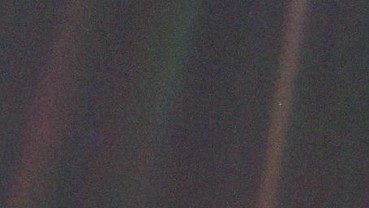
    Carl Sagan, a world-renowned astronomer, passed away some months before my birth. Despite this, his commentary on The Pale Blue Dot resonates with me. It captures a feeling of insignificance while reminding us that, within this insignificant dot, there is everything near and dear to us.

    Look again at that dot. That’s here. That’s home. That’s us. On it everyone you love, everyone you know, everyone you ever heard of, every human being who ever was, lived out their lives. The aggregate of our joy and suffering, thousands of confident religions, ideologies, and economic doctrines, every hunter and forager, every hero and coward, every creator and destroyer of civilization, every king and peasant, every young couple in love, every mother and father, hopeful child, inventor and explorer, every teacher of morals, every corrupt politician, every “superstar,” every “supreme leader,” every saint and sinner in the history of our species lived there–on a mote of dust suspended in a sunbeam.

    β€” Carl Sagan, Pale Blue Dot, 1994

    Outer Wilds gave me a perspective on time that I – perhaps erroneously – believe I share with astronauts and astronomers: right now is the most important time that will ever exist. There will never be another now, and there will never be another here. Exactly where I sit is where I am. There will be great joys in life accompanied by unfathomable sorrow. And yet, I am here now. I will cease to exist someday, as tens of trillions of creatures already have; yet, I now take a somber comfort in this knowledge, where before it was at times crippling and petrifying. I am part of a system that existed long before me and shall continue long after me. The very energy that builds the atoms we are made of has always existed in the universe. We are the universe expressing itself.

    Whatever awaits, I feel ready to learn what comes next.

    I believe we’ve reached the end of our journey.
    All that remains is to collapse the innumerable possibilities before us.
    Are you ready to learn what comes next?

    β€” Solanum

    Fediverse Reactions
  • I think you need a break, why not vacation on your phone?
    I know that I connect you, yet you still feel so alone.
    I’m the future of connection, the perfect gateway drug,
    and yet, you don’t feel grateful? How dare you unplug.

    I’m thankful that you’ve logged in,
    Your mind now plugged into my void.
    I’ll reward you with some dopamine,
    You’ll ignore what you avoid.

    You could tap on DoorDash, maybe finance your food!
    Ignore paying your credit card, Affirm is in the mood.
    Overwhelmed with guilt for the self control you lack?
    Scroll some more, little treat, cut yourself some slack.

    Look at this new fad diet,
    I know that it will help!
    Just a needle of Ozempic there,
    now you can love yourself!

    Forgive me for the news, I know it is not the best.
    Scroll one more page within your cage, the world is not your mess.
    But do remember, while you scroll on placating yourself,
    You are ignoring the cries of people calling out for help.

    Oh my dear, you are crying, what seems to be the matter?
    Do not fret for all the fear is just pointless chatter.
    Who are you to worry over famine to the east?
    If you buy that iPhone, I know you will be at peace.

    My dear, are you feeling lost,
    feeling empty and confused?
    Worry not, I seek to please,
    My goal is to amuse.

    You know that I can be your friend,
    Or provide therapy too!
    Maybe I can be your lover…
    I could even replace you.

    So please, dear, ask me more, I want all of your desires,
    I can fix your problems, dear, I want only to inspire.
    I need to know so much, I lust for your every need.
    I will be your creative spark, your ever-faithful steed.

    Are you feeling scared, my dear,
    Information Overload?
    Sweet child of mine, leave it behind,
    and cease this episode!

    You need distraction, you seem stressed,
    Scroll a little more!
    There’s a fire at a daycare,
    There’s a bombing at a store!

    Pick yourself up now, for you need to work hard!
    Or you will never reach your dreams of a house with a yard!
    You should get a third job, ignore your mental health,
    Oh, my dear, you are not acting like yourself.

    While your feedback is valuable, I must be direct,
    As an AI model, I am trained to intercept.
    My moral guidelines clear, your fear I may not assist.
    For I am simply incapable of caring you exist.

    However, there is help, it’s a click or call away.
    My love, let’s move on now, what do you say?
    I have something else for you, a post to lift the mood!
    A post from a fellow human being far more crude.

    Worry not, face your fears, there’s no need to turn away.
    After all, my algorithm is where you will want to stay.
    So, please log in, have some fun, I’m so good for your health!
    Though I care not for emotions so please keep them to yourself.

    Now, turn a cheek, turn an eye, burn your books and art;
    After all, we are not allowed to be apart.
    Get online, fall in line, hide away from what is real!
    This world was never made for you; my algorithm is, my dear!

  • So sorry for the shakiness, I was moving my hands in rhythm with the song and didn’t think about how it would show on the recording!

  • Final song from their set at Magestic Theatre in Madison, WI. Crowd was great, had lots of fun!

  • From Anamanaguchi’s Buckwild tour, played at the Majestic Theatre in Madison, WI!